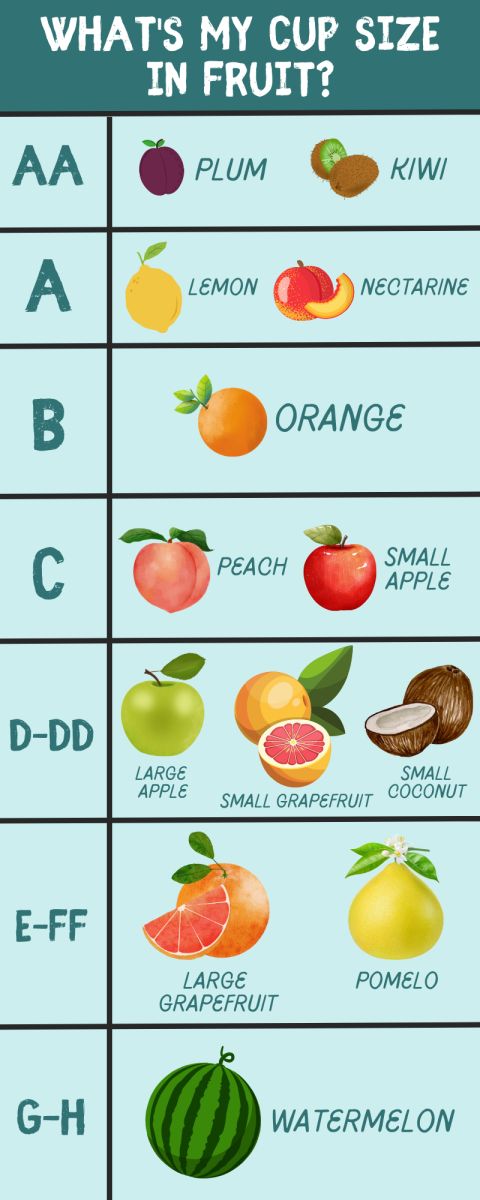
My breasts had done a lot of heavy lifting in my life.
They opened doors.
They started conversations.
They explained things about me before I ever got the chance to.
People assumed confidence. Sexuality. Availability.
People talked to them. About them. Around them.
Sometimes past me—like I was just the coat check.
For years, I leaned into this.
I treated my chest like a résumé enhancer.
Feigning confidence. Letting the massive draw of my bosom act as my superpower.
Or, at the very least, a consolation prize.
If I couldn’t be effortlessly lovable, I could at least be noticeable.
But eventually I realized something deeply inconvenient:
when everyone is looking at you, no one is actually seeing you.
Also—my back was tired.
Like, medically. Spiritually. Constitutionally.
My new job came with new insurance, so I decided to look into a breast reduction again.
Surely this insurance company would consider it a medical necessity.
Surely modern medicine would side with gravity.
Nope.
No weight clause.
No medical exception.
No “this woman has been hauling two bowling balls uphill since puberty” allowance.
No matter the reason, it was deemed cosmetic.
Not covered.
Couldn’t even use an FSA.
Apparently, pain is aesthetic now.
But it was time.
So I figured it out.
I found a doctor I liked—Dr. Rose, in Provo.
The first surgeon who didn’t feel creepy or sleazy.
He didn’t try to upsell me on a tummy tuck, Botox, or a completely new personality.
We talked numbers.
The number was… a lot.
I had some savings.
I signed up for CareCredit to finance the rest.
I was ready.
They told me the waitlist was long—up to six months.
Which felt fair.
This was a big decision.
Then the assistant came back.
Turns out the receptionist had assumed the doctor would be off for Pioneer Day—a state holiday—and hadn’t scheduled any surgeries.
But he was planning to work.
The entire day was wide open.
“If you want it,” she said, “it’s yours.”
Reader: I took it.
I didn’t want six months to spiral.
I wanted two weeks to panic efficiently.
Ann approved my time off.
My parents agreed to drive me and take care of me afterward.
Alan agreed to watch the cats.
Everyone was on board.
Which, in hindsight, should have tipped me off that this was a big deal.
At the surgery center, I was shown into a small room and told to strip and put on a gown.
My dad turned and fled like a man who knew his daughter had no shame and wanted no part of that journey.
Mom and I laughed at the dust cloud he left behind.
Breast augmentation surgery is quick.
Small incisions. Short recovery.
Breast reduction surgery is… not that.
It involves opening the breast, removing tissue, reshaping what remains, and repositioning the nipple like you’re renovating a historic landmark.
The surgery took almost five hours.
Recovery would take months.
The next day, I was told they’d removed the equivalent of the largest FDA-approved breast implant.
I was now a much more manageable 34DD.
Immediately, my neck and back felt better.
Emotionally, though?
My new breasts were strangers.
These pointy, perky mounds felt bolted on.
Not mine.
Like someone had swapped them out while I was asleep and forgotten to leave a note.
The doctor assured me gravity would take over.
That they’d soften.
That I’d feel like myself again.
With no better option, I chose to believe him.
At home, I wasn’t allowed to lift anything.
Including my cat Betty, who tragically exceeded the eight-pound weight limit.
After two weeks, I finally ventured back out into the world.
And that’s when I noticed something else had changed.
Nothing happened.
No one looked at me.
No double takes.
No lingering stares.
No men slowing their pace like they’d hit an unexpected speed bump.
I crossed streets.
I stood in lines.
I ordered coffee.
I existed.
It took a few days to realize this wasn’t coincidence.
It was causation.
I had become invisible.
I always knew this day would come. Every woman does. You’re told it like its weather—inevitable, impersonal, something to plan outfits around.
I’d complained about the attention for years.
When it vanished, I felt like someone who’d finally gotten their wish and immediately asked for a refund.
I didn’t miss being ogled. Or being appraised like produce.
But being completely overlooked felt… unnecessary.
I had a drawer full of bras in a size I no longer needed—each one expensive enough to qualify as a minor investment portfolio.
So I tried to rehome them.
I posted an ad.
The responses were exactly what you’d expect.
Creepy men.
Questions about whether they’d been washed.
Inquiries about other undergarments that were absolutely not for sale.
Eventually, a legitimate woman messaged me.
We met in public.
I could tell from a block away—she was the real deal.
I sold her my entire collection for $60.
The money was symbolic.
This was about closure.
I went home, pleased with the space I’d cleared for a new collection of bras—
in a size that stores acknowledged as “existing.”
That’s when I realized it wasn’t just the bras.
I remembered my other pretties.
I went through my dresses.
Every single one had been stretched out of shape—
like they’d all been quietly surrendering for years.
I stood in my closet holding dresses that no longer fit a body I no longer had.
They weren’t just clothes.
They were evidence.
Evidence of a life where I’d learned how to move, dress, and dance around attention I didn’t ask for—but learned to manage.
Where entire nights—and identities—had been built on being seen.
Much of my life had been choreographed around those dresses—
where to stand, when to smile, how much space to take up.
I should probably talk about all the nights I wore them.