Exchanges became addictive.
The dance scene at home was no longer enough. The music sets were too repetitive. The leads less surprising. The community too small.
I loved my little scene—don’t get me wrong. It was a small, sweaty, affectionate group. I knew almost everyone by name. But sometimes you don’t want your dealer. You want a city with options. You want variety. You want to mainline novelty.
I didn’t need a lifestyle change. I just needed a hit.
I was not going to the Sacramento exchange.
But as it drew near, I couldn’t resist. At the last minute—fueled by spontaneity and whatever part of my brain handles consequences being temporarily offline—I bought a ticket and posted in our local group that I was driving out if anyone wanted a ride.
Only one person did.
Katie.
A very chatty kindergarten teacher.
Katie was… wholesome. Not casually wholesome. Aggressively wholesome. She spent most of the drive telling me about her roommates, her crushes, her classroom dramas—everything delivered in the exact tone you use when explaining something to a five-year-old.
By hour four of our road trip, my nerves felt like exposed wires. By the time we crossed into California, I was spiritually deceased.
Traffic thickened. I was white-knuckling the wheel, trying to spot the correct exit, while the hours of driving crushed whatever joy I had left.
Katie. Would. Not. Stop. Talking.
“PLEASE!” I cut her off mid-sentence. “Stop talking and help me find the exit!”
She stared at me, deeply insulted.
Then she shut up.
And because she was offended, she chose violence.
She did not say a word as we cruised right past the exit sign.
These were the days before smartphones.
I was navigating like a pirate—with printed MapQuest directions and blind optimism. No Garmin to tell me I’d made a mistake in a smug, judgmental voice. No stars to guide me either. Just vibes. Bad ones.
We went twenty miles past our exit before I noticed signs for San Francisco.
“Did you see the exit?!” I asked.
She had.
And apparently thought she had shown me.
We turned around. And that is when she decided to tell me that the housing she’d arranged—the place I was supposed to drop her before heading to my hotel—was twenty minutes outside Sacramento.
An exit we had passed long before her silent protest era.
I dropped her off.
Then pointed my rusty-but-reliable Buick toward the south end of the city for yet another twenty-minute drive and finally found my hotel.
Total drive time: eleven hours.
I wasn’t sure I had a single dance left in me. But after a shower, and after putting on my dress, I talked myself into going out. Blues dances do that—you think you’re too tired, and then the music turns you into someone else.
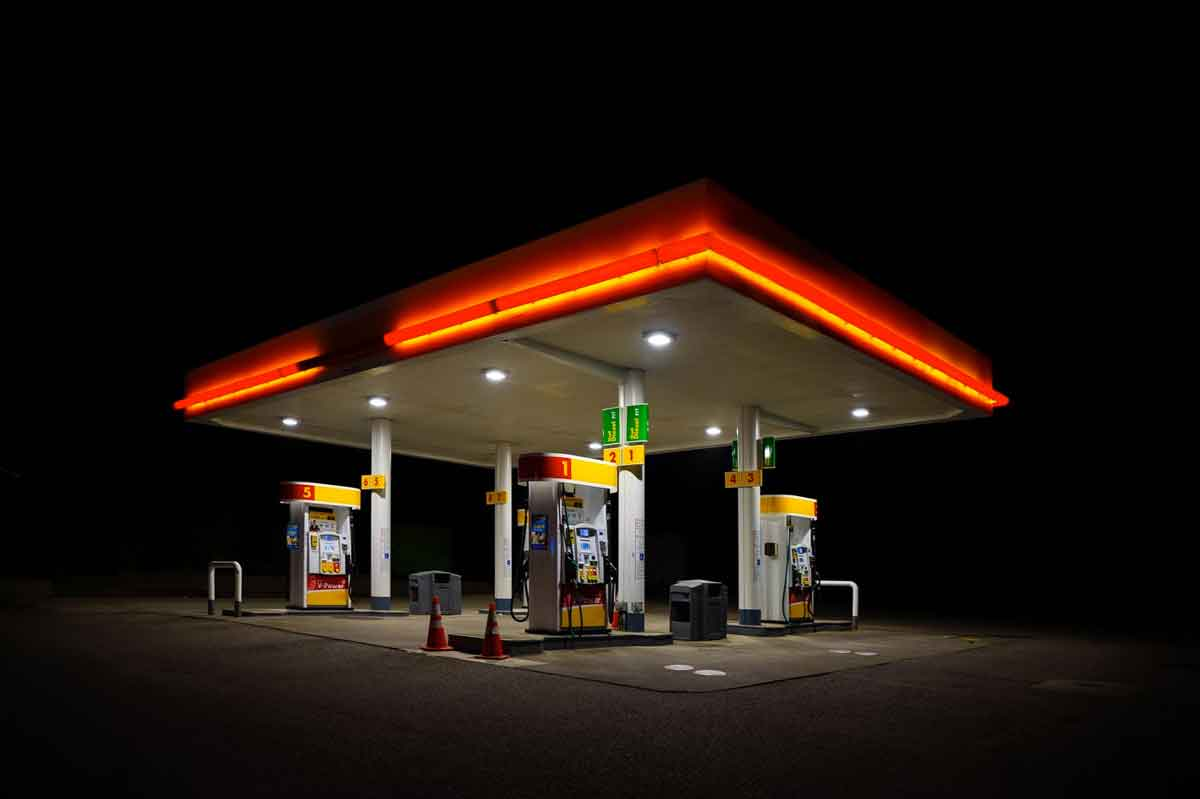
On the way to the dance, I stopped for gas. I stood there waiting for the tank to fill, debating whether I should buy a map in case I got lost again, when I heard a voice behind me.
“How much?”
I turned to see a large, smiling Black man walking toward me.
“What?” I said.
“How much?”
There was a long, confused pause while my brain sprinted through interpretations before landing on the only one that made sense to me.
“For my car?!” I sputtered. “I can’t sell my car! I have to drive back to Utah!”
He nodded seriously. “Damn,” he said. “That’s a nice car.”
He was admiring my old, dirty Buick like it was a Bentley.
I stood there completely baffled until the pump clicked. I paid, got back into my aggressively unremarkable automobile, and drove to the dance.
Hours later, sitting on the sidelines catching my breath between songs, it hit me like a delayed punchline.
He did not want to buy my car.
He had been asking how much.
And suddenly everything made sense—the smile, the look, the confidence.
I had shown up to a Sacramento gas station in the most modest dress imaginable. Knee-length. Long sleeves. Modest neckline. Purchased by my mother. Practically radiating Young Women’s presidency energy.
I replayed the moment, mortified and delighted at the same time. It took a full thirty seconds before I started laughing—loudly, uncontrollably—alone in the corner of a crowded dance hall.
People glanced over, probably wondering what private joke had detonated in my brain.
Damn.
I could have paid for my weekend.
The next night, I was trying to find the small, obscure dance hall—an old Jewish Community Center—where the next dance was held. I clutched my printed map and circled the same few blocks over and over, with no luck.
I pulled over and asked random people if they’d heard of the building or could help me find the address.
Blank stares.
Again and again.
People probably wondering where this prostitute was trying to go.
I finally called my dad, waking him up, and asked him to look up the address—maybe I’d gotten it wrong. I could hear the dial-up connecting while he tried to connect his tired brain. He confirmed I was in the right neighborhood. I should have been right on top of it.
I kept him on the phone while I circled the block a few more times. Then I thanked him and let him go back to bed.
I pulled into a parking lot and cried.
A few minutes later, I looked up and saw a group of people walking past my car toward a busy, brightly lit building on the next street over.
I’d found it.
At last.
I am never going back to Sacramento.
I hate that place.
I got home. I think I drove Katie home. I must have. I have no memory of it.
Please do not search the internet for missing persons that weekend.
Especially if there are stories involving prostitutes kidnapping annoying kindergarten teachers.
I don’t want to know.
Sacramento had that effect on me.
Everything there felt a little grimy. A little transactional. Like fun cost extra, dignity was optional, and no one was keeping receipts.
I told myself I wasn’t chasing anything.
I just really loved to dance.
And like anyone with a perfectly healthy relationship to her habits,
I kept going—
city to city, floor to floor—
telling myself I could stop anytime I wanted.
One response to “36”
Ever been to Flurry? I’m hoping to go next year